5 Scheduling Mistakes That Are Killing Your Profits
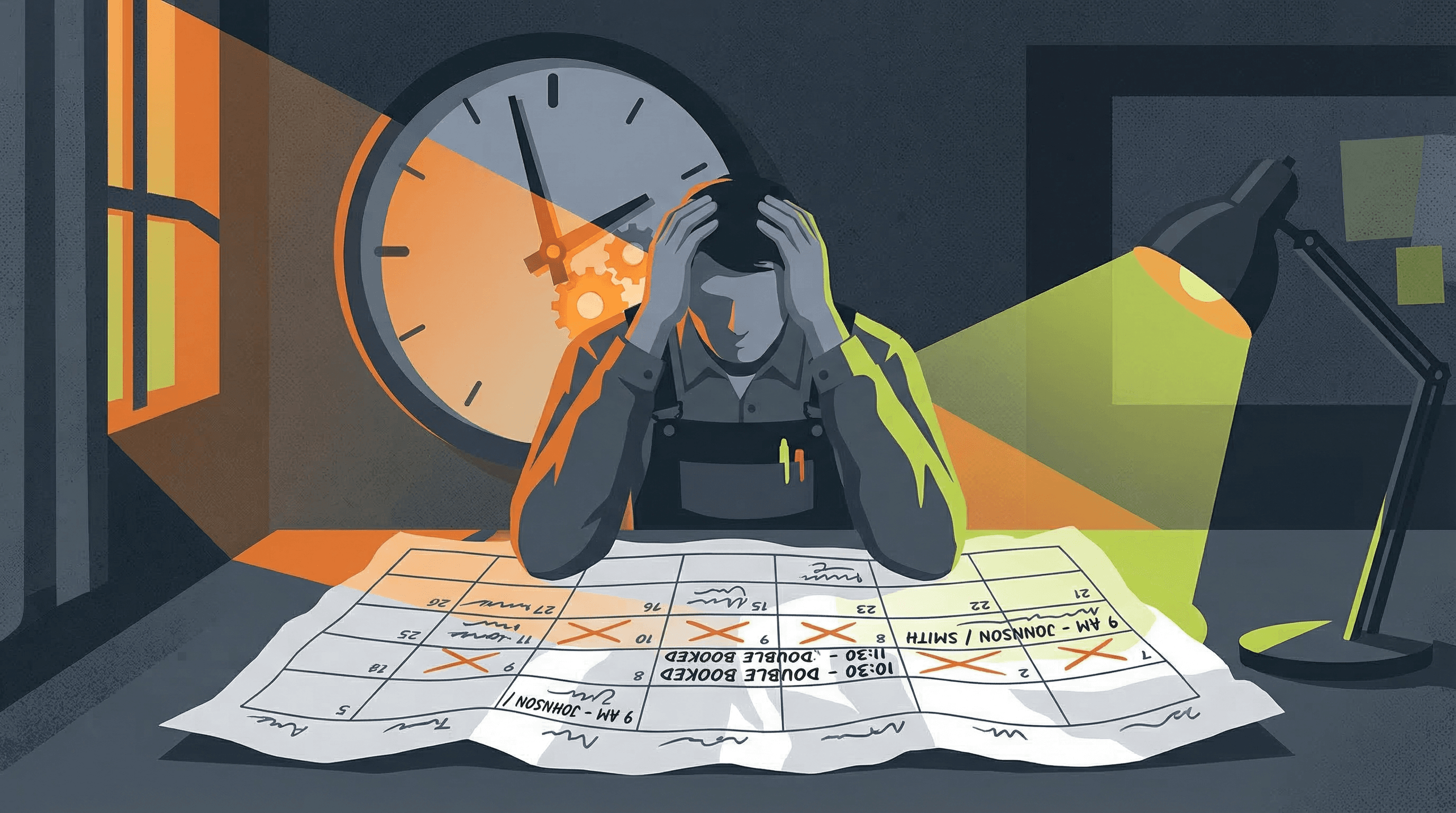
Every missed appointment, double-booked tech, or wasted hour on the road costs your business real money. Scheduling is the heartbeat of a field service operation — and when it misfires, profits bleed out fast. Here are five scheduling mistakes that most service businesses make, and exactly how to stop them.
Mistake 1: Double-Booking Your Technicians
Double-booking happens when you have two jobs assigned to the same technician at overlapping times. It seems obvious to avoid, yet it plagues businesses that rely on spreadsheets, paper calendars, or disconnected tools. The result: a frantic morning phone call, a furious customer, and a tech who starts their day already behind.
The fix is a real-time scheduling board where availability is visible to everyone dispatching jobs. A good field service platform prevents double-booking at the point of scheduling — not after the damage is done.
Mistake 2: No Buffer Time Between Jobs
Back-to-back scheduling sounds efficient on paper. In reality, jobs run long, traffic is unpredictable, and techs need time to complete paperwork, grab parts, and mentally reset between calls. When there is no buffer, one delay cascades through the entire day.
Build 15-30 minute buffers into your scheduling template depending on your job type. HVAC installs may need more; simple tune-ups less. Track how long your jobs actually take — not how long you hope they take — and use that data to right-size your slots.
Mistake 3: Ignoring Travel Time
Routing three jobs across opposite ends of a city adds an hour or more of unproductive drive time per tech per day. Multiply that by five techs and five days, and you have burned 25+ hours a week on windshield time that generates zero revenue.
Geographic clustering is the simplest fix: group jobs in the same ZIP code or neighborhood on the same day. More sophisticated operations use route optimization tools that automatically sequence jobs to minimize total drive time. Even rough geographic clustering can recover an hour or more per tech per day.
Mistake 4: Not Using Recurring Schedules
If you manually book every maintenance visit, seasonal tune-up, or recurring service call, you are creating work for yourself and leaving revenue on the table. Recurring customers who forget to call and reschedule simply fall out of your pipeline.
Set up recurring schedules for maintenance agreements, subscription services, and regular accounts. A customer on a bi-annual HVAC maintenance plan should have their next appointment automatically pre-scheduled the moment the current one is completed. Your dispatch board fills itself, and your customers feel cared for.
Mistake 5: Manual Dispatching at Scale
When you have one or two techs, manual dispatching works fine. Text a job, get a confirmation, done. But as you grow to five, ten, or twenty techs, manual dispatching becomes a full-time job in itself — and a fragile one. Dispatchers spend hours each day making calls, sending texts, and updating whiteboards instead of focusing on customer experience and upsell opportunities.
Automated dispatching tools send job details, addresses, and customer notes directly to a tech's mobile app. Techs can accept, start, and complete jobs from their phone. Status updates flow back automatically. Your dispatcher moves from firefighter to orchestrator.
The Bottom Line
Scheduling mistakes do not feel dramatic in the moment. But every wasted drive, every double-booking, every missed recurring visit is a small leak in your revenue bucket. Fix these five issues and you will see the impact in both your team's morale and your monthly P&L. The tools to solve them exist — the question is whether you are using them.